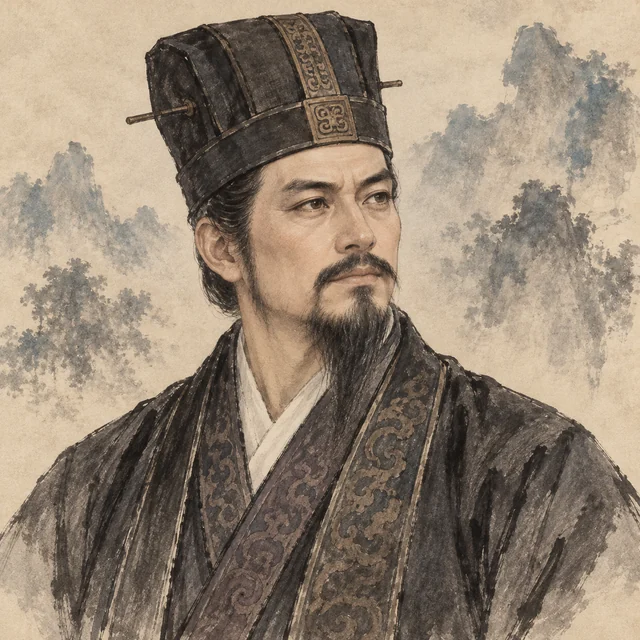
HISTORICAL PERSON
Chen Qun
陈群
Serving Cao Cao, Cao Pi, and Cao Rui, Chen Qun helped shape court policy and established the nine-rank system for recommending officials.
This entry is supported by historical references, but does not yet have a conversation profile.
PRIMARY BIOGRAPHY
Biography
Chen Qun (d. 236), courtesy name Changwen, came from the celebrated Chen clan of Yingchuan — his grandfather Chen Shi, father Chen Ji, and uncle Chen Chen were called the “Three Lords.” As Liu Bei’s aide he warned against taking Xu province: “Yuan Shu is still strong, and if Lü Bu strikes your rear, Xu will bring you nothing.” Liu Bei went anyway, lost Xiapi to Lü Bu, and regretted ignoring him.
Serving Cao Cao and then Cao Pi, he rose to Director of the Secretariat and created the Nine-Rank System — local “rectifiers” grading every scholar-official candidate from first to ninth class — the machine of aristocratic selection that governed Chinese officialdom for the next four centuries.
As Minister of Works under Emperor Ming he repeatedly memorialized against the grand palace works at Luoyang, citing Yu and Tang who kept humble palaces, and the emperor trimmed his projects in deference. He died in 236. Chen Shou: “he acted always in the name of duty, a clear-stream reputation.”
Life and role
- Primary role
- Minister over the Masses and Director of the Secretariat
- Active period
- Documented coverage: Late Han and Cao Wei (c. 190–237)
- Primary group
- Cao-Wei
Affiliations across a lifetime
- 194–199
Under Liu Bei
Warned Liu Bei against Xu province in vain; joined Cao Cao after Lü Bu’s fall
- 220–236
Wei — Minister of Works
Architect of the Nine-Rank System; remonstrated against palace works
HISTORICAL RECORD
Historical sources
- Records of the Three Kingdoms · Wei, Book 22 · 桓二陈徐卫卢传 ↗
Chen Shou’s base text contains the biographies of Huan Jie, Chen Qun (with his son Chen Tai), Chen Jiao, Xu Xuan, Wei Zhen, and Lu Yu. The concluding evaluation is separate from the biographies.