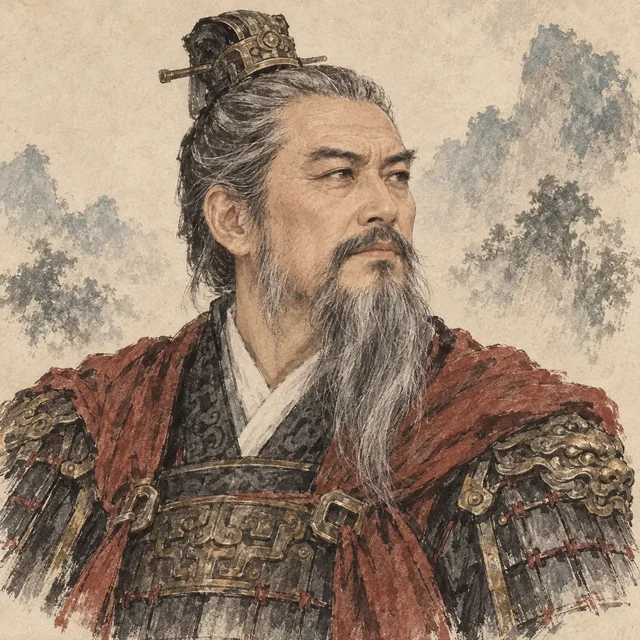
HISTORICAL PERSON
Huangfu Song
皇甫嵩
Huangfu Song commanded Han forces against the Yellow Turbans, relieved the siege at Changshe, defeated Zhang Liang at Guangzong, and requested tax relief for famine victims.
This entry is supported by historical references, but does not yet have a conversation profile.
PRIMARY BIOGRAPHY
Biography
Huangfu Song, styled Yizhen, came from Chaona in Anding, the nephew of the Liao-frontier general Huangfu Gui. From youth he was set on letters and arms, loved the Odes and the Documents, and practised archery and horsemanship. Recommended filial-and-incorrupt and flourishing talent, he declined summonses from Grand Commandant Chen Fan and General-in-Chief Dou Wu; summoned by public carriage under Emperor Ling, he became gentleman-consultant and then administrator of Beidi. In 184 the Yellow Turbans rose, and Huangfu Song advised lifting the proscription of the partisans and paying out the palace treasury and stable horses to the troops; the emperor agreed. He was made General of the Gentlemen of the Left with the credentials, joining General of the Right Zhu Jun with over forty thousand men — the five regiments, Sanhe cavalry and picked volunteers — against the Yingchuan Turbans. Zhu Jun was first defeated by the rebel Bocai, and Huangfu Song held Changshe. When Bocai’s host invested the town and the outnumbered soldiers were afraid, he taught his officers the art of surprise and fire attack; at dusk a great wind rose, and by night he ordered torches lit and sallied, with answering fires from the walls. As he charged with drums rolling, the rebels broke — and the cavalry commandant Cao Cao arrived just then to join the battle. Tens of thousands of heads were taken, and Huangfu Song was enfeoffed Marquis of the Capital District.
Pressing the victory, Huangfu Song and Zhu Jun cleared the Turbans from Runan and Chen — three commanderies in all; in the eighth month he took Buyi alive at Cangting. When the Generals of the North and East, Lu Zhi and Dong Zhuo, both returned unsuccessful against Zhang Jue, Huangfu Song was ordered in. Facing Zhang Jue’s brother Zhang Liang at Guangzong and finding his troops crack fighters, he closed camp and rested his men, watching; sensing the rebels’ vigilance slacken, he secretly marshalled by night, reached their lines at cockcrow, and by afternoon had smashed them — Zhang Liang dead, thirty thousand heads, fifty thousand more drowned in the river, thirty thousand wagons burned. Zhang Jue having died of sickness, his coffin was split and his corpse beheaded for the capital. In the eleventh month Huangfu Song struck the last brother Zhang Bao at Xiaquyang and killed him too, taking over a hundred thousand and piling a victory mound south of the city. He was at once made General of Chariots and Cavalry of the Left, governor of Ji province, and Marquis of Huaili. He asked that Ji province’s land tax be forgiven one year to feed the starving; the people sang, “The world is in chaos, the markets are ruins, mothers cannot keep sons nor wives their husbands — but we have Huangfu, and we live in peace again.” He was gentle with his soldiers and won their hearts: on the march he would not enter his own tent until their shelters stood, nor taste his food until every soldier had eaten.
Having broken the Turbans, Huangfu Song’s might shook the realm while the court slid into disorder. Yan Zhong of Hanyang, a former magistrate of Xindu, urged on him a course of “unprecedented ambition”; Huangfu Song, alarmed, refused, and Yan Zhong fled. In 188 the Liang province rebel Wang Guo besieged Chencang; Huangfu Song, again General of the Left, was sent with the vanguard general Dong Zhuo, twenty thousand each. Dong Zhuo pressed for a forced march to relieve the town, but Huangfu Song held that Chencang, though small, was stoutly held, and struck only when the rebels were spent — Wang Guo was routed with over ten thousand heads, and Dong Zhuo, shamed and furious, hated him from that day. In 190 Dong Zhuo summoned Huangfu Song to be commandant of the capital gates, meaning to kill him; his son Huangfu Jianshou, an old friend of Dong Zhuo’s, fled from Chang’an to Luoyang, confronted Dong Zhuo with the great right of the matter, and kowtowed weeping until the whole company was moved — and his father was spared. When Dong Zhuo was killed, Huangfu Song was made General who Conquers the West, then General of Chariots and Cavalry; that autumn he was made Grand Commandant, dismissed in winter on account of a shooting star, and served again as imperial household grandee and then grand master of ceremonies. Soon after, Li Jue rose in revolt, and Huangfu Song died of illness; he was granted the seal and ribbons of General of Agile Cavalry posthumously.
Life and role
- Primary role
- Han general
- Active period
- Late Eastern Han (170s–220)
- Primary group
- Han court & warlords
Affiliations across a lifetime
- 184
The fire attack at Changshe
With Zhu Jun against the Yingchuan Turbans; broke Bocai at Changshe by night fire attack as Cao Cao arrived
- late 184
General of Chariots · Governor of Ji
Killed Zhang Liang at Guangzong and Zhang Bao at Xiaquyang; the people sang that Huangfu gave them back their peace
- 188–195
Grand Commandant
Crushed Wang Guo at Chencang, earning Dong Zhuo’s hate; nearly killed, saved by his son; Grand Commandant after Dong Zhuo’s death, died amid Li Jue’s revolt
HISTORICAL RECORD
Historical sources
- Book of the Later Han · Book 71 · Biographies of Huangfu Song and Zhu Jun ↗
Use the named biography or chronicle entry in this volume; compare it with the Three Kingdoms record where sources differ.