HISTORICAL PERSON
Sima Zhi
司马芝
A Wei official noted for fair legal decisions, resistance to powerful patrons, and advice on farming policy.
This entry is supported by historical references, but does not yet have a conversation profile.
PRIMARY BIOGRAPHY
Biography
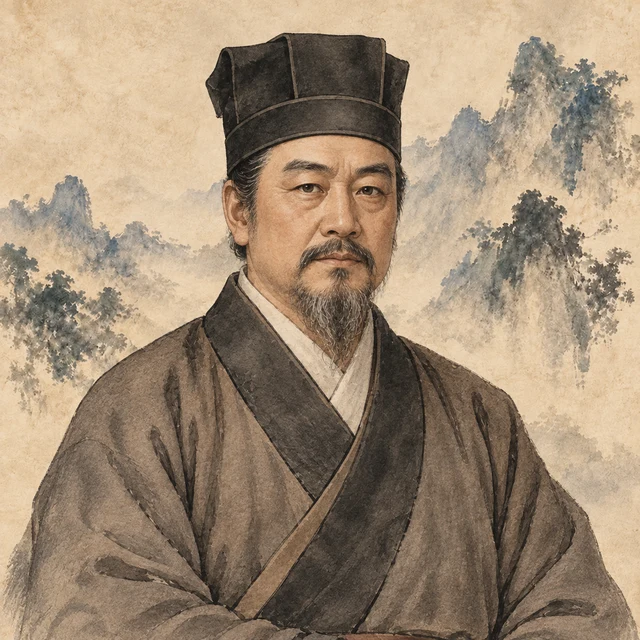
Sima Zhi, styled Zihua, was from Wen in Henei. As a young scholar fleeing the disorders into Jingzhou, he met bandits in the Luyang hills; his companions all abandoned their aged and weak, but Sima Zhi sat guarding his old mother, and when the bandits put a blade to him he bowed his head and said, “My mother is old — her life rests with you.” The bandits said, “This is a filial son; to kill him would be unrighteous,” and spared them. He lived in the south for over ten years, plowing his own fields and keeping his integrity. When the Grand Ancestor took Jingzhou he made him chief of Guan. In that raw era the great clerk Liu Jie, of an old and swaggering house, kept a thousand retainers who robbed outside the offices and corrupted them within; when Sima Zhi drafted Liu Jie’s man Wang Tong for service, the staff protested that the Liu house had never furnished corvée, but he overrode them with a letter of rebuke to Liu Jie and made Wang Tong serve — and the powerful began to restrain themselves.
Promoted to prefect of Guangping, he dealt with the arrogant favorite Liu Xun, general who smites the Caitiffs and formerly his own commandery’s commanding general: Liu Xun’s retainers repeatedly broke the law, and his letters to Sima Zhi, unsigned, begged favors — which Sima Zhi never answered, handling every case by statute. When Liu Xun was later executed for treason and his correspondents all fell, Sima Zhi alone was praised. As superintendent of trials he memorialized in the case of stolen palace silk found in a privy, arguing that when the loot was already recovered, beating suspects risked false confession — the Grand Ancestor approved. He then governed Ganling, Pei, and Yangping with distinction in each.
In Huangchu he came in as intendant of Henan, curbing the strong and aiding the weak, and was enfeoffed a marquis within the passes under Emperor Ming. Pure and frugal in office, he served Cao Shuang’s regency as grand minister of agriculture and memorialized that the agricultural garrisons’ people had drifted into trade for profit, urging a return to Emperor Wu’s original system of tuntian devoted to farming — approved. He died in office with no surplus wealth in his house, and none who governed Henan under Wei matched him.
Life and role
- Primary role
- Cao Wei official
- Active period
- Documented coverage: late Han through Cao Wei
- Primary group
- Cao-Wei
Affiliations across a lifetime
- late Jian’an–Huangchu
Prefect of Guangping, superintendent of trials
Broke the Liu clans’ lawless retainers, ignored the favorite Liu Xun’s begging letters, and stopped the coerced silk-theft prosecutions
- Emperor Ming–King of Qi eras
Intendant of Henan, minister of agriculture
Restored the tuntian system to farming and died in office with an empty treasury at home
HISTORICAL RECORD
Historical sources
- Records of the Three Kingdoms · Wei, Book 12 · 崔毛徐何邢鲍司马传 ↗
Chen Shou’s base text contains the biographies of Cui Yan, Mao Jie, Xu Yi, He Kui (with his son He Zeng), Xing Yong, Bao Xun, and Sima Zhi (with his son Sima Qi). The accounts mention Yang Xun under Cui Yan; Guan Cheng, Wang Ying, and Guo Zu under He Kui; Liu Yao under Bao Xun; and Liu Jie under Sima Zhi. Bao Xin’s extended account is in a Pei Songzhi annotation citing Wei Shu.