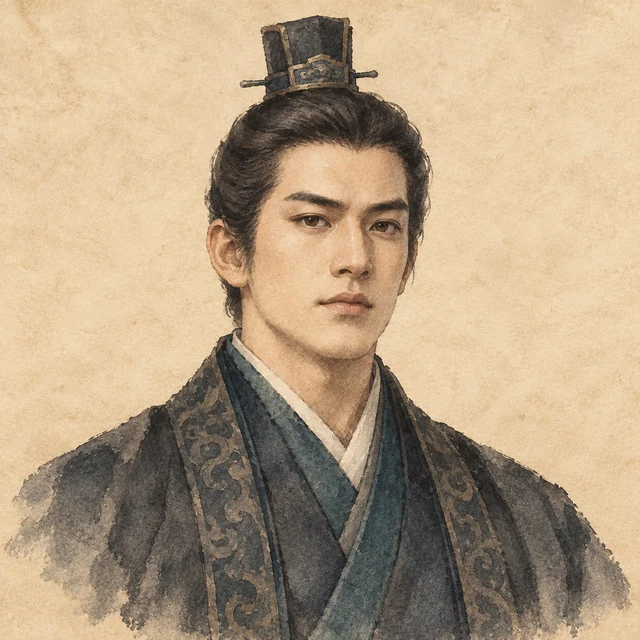
HISTORICAL PERSON
Wang Bi
王弼
A Gaoping man from Shanyang; the leading Xuanxue thinker of the Zhengshi era, he commented on the Zhouyi and Laozi and died in 249 at twenty-four.
This entry is supported by historical references, but does not yet have a conversation profile.
PRIMARY BIOGRAPHY
Biography
Wang Bi, styled Fusi, came from Gaoping in Shanyang. Precociously perceptive, by his teens he loved Laozi and could argue with fluent brilliance. Pei Hui of the appointment bureau marvelled at first sight and asked him: “Non-being is truly that by which all things are sustained — yet the sage never spoke of it, while Laozi expounds it endlessly. Why?” Wang Bi answered: “The sage embodies non-being, and non-being cannot be taught in words, so he did not speak of it; Laozi stood on the side of being, and so spoke forever of what it lacks.” (Recorded in He Shao’s biography of Wang Bi, quoted in Pei Songzhi’s annotation.) Fu Gu soon admired him likewise.
He Yan, then the Master of Writing, marvelled at Wang Bi and sighed: “Confucius said the young are to be held in awe — with a man like this, one could discuss the border of Heaven and man!” In the Zhengshi era Wang Bi was appointed a secretariat gentleman; granted private audience with Cao Shuang, he talked of the Way for a whole watch and of nothing else, and Cao Shuang laughed at him for it. Junior in the secretariat and no hand for administration, he gave himself wholly to commentary. He Yan held that the sage had neither joy nor anger, grief nor delight — a subtle doctrine that Zhong Hui and others propagated; Wang Bi differed: in spirit the sage surpasses men, but in the five feelings he is one with them. Because his spirit is full, he can embody the utmost harmony and penetrate non-being; because his feelings are like ours, he cannot but answer things with sorrow and joy — yet the sage’s feelings answer things without being entangled by them.
Wang Bi commented on the Changes and on Laozi, and wrote the Outline Introduction to Laozi; he swept away the Han classicists’ tangle of image-and-number and made “catch the meaning, forget the words” the rule — later students of the Changes have followed him ever since. In 249 Cao Shuang fell and Wang Bi was dismissed on a public charge; that autumn he died of a pestilent fever, aged twenty-four. When the future Jing Prince of Jin (Sima Shi) heard of his death, he sighed for days. His learning, paired with He Yan’s as the “Sound of Zhengshi”, made him the patriarch of Wei-Jin dark learning.
Life and role
- Primary role
- Wei scholar of Mysterious Learning
- Active period
- Documented coverage: late Han through Cao Wei
- Primary group
- Cao-Wei
Affiliations across a lifetime
- Zhengshi era
Secretariat gentleman
Praised by He Yan; laughed at by Cao Shuang for talking only the Way, he turned wholly to commentary
- scholarship
Patriarch of dark learning
Commented the Changes and Laozi; held the sage feels yet is never entangled — the Sound of Zhengshi
HISTORICAL RECORD
Historical sources
- Records of the Three Kingdoms · Wei, Book 28 · 王毌丘诸葛邓锺传 ↗
Chen Shou’s base text contains the biographies of Wang Ling, Guanqiu Jian (with Wen Qin), Zhuge Dan (with Tang Zi), Deng Ai (with Zhou Tai), and Zhong Hui (with Wang Bi). Zhong Hui’s biography also records Jiang Wei’s final actions after Shu fell. Pei Songzhi’s annotations on the page should be identified separately.
- Records of the Three Kingdoms, with Pei Songzhi annotations · Pei Songzhi annotations to Wei, Book 28 · Wang Ling, Guanqiu Jian, Zhuge Dan, Deng Ai and Zhong Hui ↗
Annotations to the biographies of Wang Ling, Guanqiu Jian, Zhuge Dan, Deng Ai and Zhong Hui, including He Shao’s biography of Wang Bi; attributed accounts remain distinct from Chen Shou’s base text.