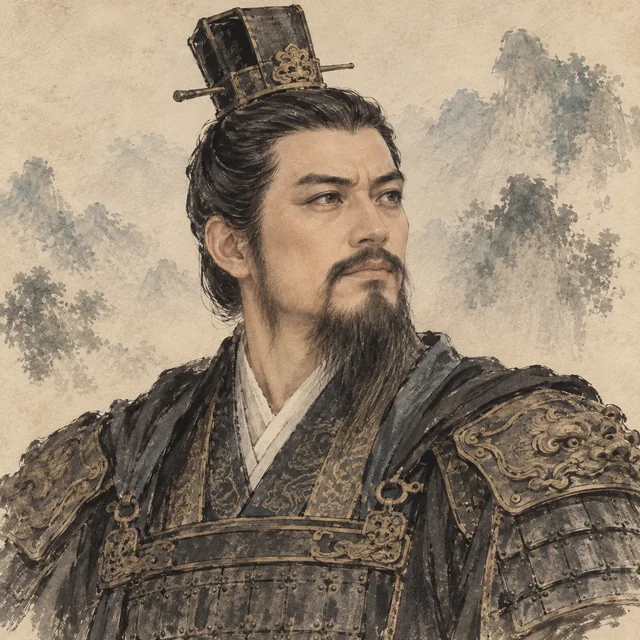
HISTORICAL PERSON
Wang Hun
王浑
Western Jin’s General who Pacifies the East commanding Yang province; in 279–280 he crossed from Hengjiang, defeated Wu’s army at Banqiao, and famously disputed the credit for conquering Wu with Wang Jun.
This entry is supported by historical references, but does not yet have a conversation profile.
PRIMARY BIOGRAPHY
Biography
Wang Hun (223–297), courtesy name Xuanchong, of Taiyuan, was the son of Wei’s Minister of Works Wang Chang. Dismissed in the purge of Cao Shuang’s adherents, he rose again under Jin, and as Xu province inspector opened the granaries in a famine year.
In the conquest of Wu (279–280) Wang Hun drove over the Hengjiang line, took Xunyang and Gaowang, and accepted the surrender of Wu generals; then at Yanghe Bridge his lieutenants Sun Chou and Zhou Jun annihilated Chancellor Zhang Ti’s thirty thousand, killing Zhang Ti, Shen Ying, and Sun Zhen with seventy-eight hundred heads — the last field army of Wu destroyed.
But Wang Jun’s tower-ships sailed straight past him down the Yangzi, ignored his orders to halt, and took Sun Hao’s surrender at Stone City. Shamed and furious, Wang Hun memorialized against Wang Jun for disobedience and demanded he be sent to the capital in a cage cart; the emperor refused and shielded Wang Jun. Wang Hun returned to Shouyang as General who Conquers the East, won the surrendered south by patient government, and rose to Minister of the Interior. He died in 297 at seventy-five.
Life and role
- Primary role
- Western Jin General who Pacifies the East
- Active period
- Documented coverage: the Wei–Jin transition and early Western Jin
- Primary group
- Western Jin
Affiliations across a lifetime
- 265–279
Jin — Xu province
Famine relief and border governance; eastern commander for the conquest of Wu
- 279–297
Conquest and rivalry
Destroyed Wu’s last field army; feuded with Wang Jun over the honor of taking Jianye
HISTORICAL RECORD
Historical sources
- Book of Jin · Book 42 · Biographies of Wang Hun and Wang Jun ↗
Wang Jun’s biography: building the Yi Province fleet and the descent on Jianye.